
Author: rory-admin

  • The biggest risk to your business might be a past employee, our guide to offboarding a past employee properly

    The biggest risk to your business might be a past employee, our guide to offboarding a past employee properly

    When most business owners think about security risks, they picture hackers, ransomware, or phishing emails. Those threats are real. But in many small and midsize businesses, the biggest exposure is much closer to home.


    It is the former employee whose access was never fully removed.


    Improper offboarding is one of the most common and most expensive security gaps we see at Valley Techlogic. A user account left active, a shared password that never changed, or a mobile device that still syncs company email can quietly create major risk months after someone leaves. If your offboarding process is informal or inconsistent, now is the time to fix it.


    Why past employees are a real security risk


    Most former staff are not malicious. The risk usually comes from oversight, not intent. However, the impact can be just as damaging.


    Here is what commonly goes wrong:


    • Email accounts remain active and continue receiving sensitive information
    • Microsoft 365 or Google Workspace access is never fully revoked
    • Saved credentials remain on personal or unmanaged devices
    • Shared passwords are not rotated after departure
    • VPN or remote access tools stay enabled
    • File ownership and permissions are never reassigned

    For IT staff and security teams, this is basic hygiene. But in the real world, especially in small business environments, offboarding often happens in a rush. HR processes the paperwork, IT is notified late or not at all, and access cleanup becomes partial at best. You only need one missed system to create a problem.


    Many organizations assume that if the employee was trustworthy, there is little to worry about. That is a dangerous assumption. Former employee risk shows up in these five ways:


    1. Data exposure Old accounts can still access client files, financial records, and internal communications.
    2. Compliance violations For regulated industries, failure to revoke access can create audit findings or legal exposure.
    3. License waste From a Microsoft 365 CSP perspective, which we deal with daily, inactive users often continue consuming paid licenses long after departure.
    4. Operational confusion Emails, approvals, and system alerts may continue routing to someone who no longer works for you. The longer an account stays active, the more expensive the cleanup becomes.
    5. Your offboarding checklist that actually works If you want an offboarding process that holds up under real world pressure, it needs to be standardized and repeatable. This is the baseline we recommend to clients across California.

    Remediating these issues is as simple as a step by step process outlined below:


    Identity and access

    • Disable the user in Entra ID or your directory immediately
    • Revoke all active sessions and tokens
    • Remove MFA methods tied to personal devices
    • Remove group memberships and admin roles
    • Convert mailbox or archive as needed

    Email and collaboration

    • Set mailbox forwarding if business continuity requires it
    • Assign mailbox and OneDrive ownership
    • Remove from Teams, SharePoint, and distribution lists
    • Review inbox rules and external forwarding

    Devices and endpoints

    • Collect company owned hardware
    • Remove device from Intune or MDM
    • Wipe or reset as appropriate
    • Verify no unmanaged personal devices retain access

    Network and remote access

    • Disable VPN accounts
    • Remove remote management tools
    • Rotate any shared credentials
    • Review firewall and WiFi access lists

    Licensing and billing

    • Remove or reassign Microsoft 365 licenses
    • Validate billing alignment in CSP or direct
    • Document the change for audit trail

    If this feels like a lot, that is because it is. Mature environments automate most of this.


    Timing matters more than you think


    One of the biggest mistakes we see is delay. Offboarding should begin the moment HR confirms separation, not days later.


    Best practice is:


    • Immediate access disable as soon as termination discussions are over
    • Same day device and license review
    • 24 hour validation sweep across key systems

    In environments using Entra ID, Conditional Access, and centralized device management, this can be largely automated. In fragmented environments, it becomes manual and error prone. This is where many SMBs get into trouble.


    How to future proof your offboarding process


    If you want this to stop being a fire drill every time someone leaves, focus on three structural improvements.


    1. First, centralize identity. The more systems tied to Entra ID or your primary directory, the easier clean removal becomes.
    2. Second, automate wherever possible. PowerShell, Graph automation, and lifecycle workflows dramatically reduce human error. This is exactly why many MSPs, including Valley Techlogic deployments, invest heavily in standardized offboarding runbooks.
    3. Third, require HR and IT alignment. Offboarding failures are often communication failures. A simple, enforced workflow between departments eliminates most risk.

    The bottom line is cybersecurity is not only about stopping outside attackers. It is about maintaining control of your own environment. A single overlooked account from a past employee can quietly undermine your security, your compliance posture, and your licensing costs. If your offboarding process lives in a checklist on someone’s desktop or depends on memory, it is time to tighten it up.


    At Valley Techlogic, we help organizations across California turn offboarding into a controlled, repeatable process that closes risk instead of creating it. If you are not completely confident in your current process, now is the right time to review it. Learn more today through a consultation.


  • Investors are getting nervous as tech stocks tumble amid shakeups in AI and Bitcoin
  • This week 16,000 Amazon employees learned they were losing their job via an erroneously sent email
  • The Verizon outage that left more than a million without cell service yesterday is fixed, but what caused it?
  • Microsoft 365 Business Premium with Copilot Included? This new SKU makes integrating AI into your business more affordable and accessible
  • This article was powered by Valley Techlogic, leading provider of trouble free IT services for businesses in California including Merced, Fresno, Stockton & More. You can find more information at https://www.valleytechlogic.com/ or on Facebook at https://www.facebook.com/valleytechlogic/ . Follow us on X at https://x.com/valleytechlogic and LinkedIn at https://www.linkedin.com/company/valley-techlogic-inc/.

  • Starting next month, you’ll need photo ID to fully access Discord and users are not happy

    Starting next month, you’ll need photo ID to fully access Discord and users are not happy

    This week, Discord announced that it will be rolling out ID verification globally. They have already required this in the UK and Australia where privacy laws to protect minors have been enacted, but this push to also cover the US has some users up in arms about the policy.


    This is after controversaries involving minors rocked the platform this year, with some allegations of impropriety occurring on the platform as it did in the Roblox space earlier this year. With a spotlight shining on the issue, it’s likely that Discord sees this as their opportunity to get ahead of further issues.


    Starting next month, everyone will be on a “teen by default” account unless they have been ID verified or Discord can extrapolate from previous interactions with the program that the user is likely an adult (this will include factors such as account age). For those required to verify age they will need to submit government ID or utilize an “AI-powered” video selfie to regain access to adult features.


    These include channels with NSFW content (as verified by Discord themselves), media labeled as “sensitive” will be obscured, and messages and friend requests sent from strangers being routed elsewhere or will include a warning message.


    Users have been vocally against the change, with many citing a data breach that occurred last October that included PII data as a reason not to hand over identification to the company. While Discord announced 70,000 accounts were effected some third-party news sites believe that number to be much higher.


    As privacy laws continue to become more strict, including in the US, there is going to be more of an imperative for protecting private data clients choose to share with you. As with Discord, a data breach in conjunction for a request like this is not a good look. Here are some ways you can protect your client’s PII data as well as advice on proper storage and disposal:


    • Limit access to PII to only employees who require it for their job duties
    • Use multi-factor authentication and strong password policies
    • Encrypt sensitive data both in transit and at rest
    • Store physical records in locked cabinets or secured rooms
    • Keep systems patched and protected with up-to-date security software
    • Train staff regularly on privacy and data handling best practices
    • Retain PII only for as long as it is legally or operationally necessary
    • Shred paper documents before disposal
    • Use certified data destruction methods for retired hardware
    • Maintain audit logs to track access to sensitive information

    If you’re in an industry covered by regulatory compliance (HIPAA, NIST, CMMC, WISP etc) then this list may look very familiar to you. There’s a good bit of cross over between regulatory compliance and common-sense data protection. Even if your industry does not have a formal regulatory compliance need (yet) we suggest that all businesses across the board follow these guidelines, particularly if client data is at stake.


    If regulatory compliance or even just beefing up your cyber security measures in the wake of what feels like an onslaught of data breach news is a goal in 2026, Valley Techlogic has you covered. We utilize the Center for Internet Security (CIS) framework in our own business and are experts at making sure our clients are compliant with regulations that affect their business and have best-in-class protections across the board. Learn more today through a consultation.


  • Investors are getting nervous as tech stocks tumble amid shakeups in AI and Bitcoin
  • This week 16,000 Amazon employees learned they were losing their job via an erroneously sent email
  • The Verizon outage that left more than a million without cell service yesterday is fixed, but what caused it?
  • Microsoft 365 Business Premium with Copilot Included? This new SKU makes integrating AI into your business more affordable and accessible
  • This article was powered by Valley Techlogic, leading provider of trouble free IT services for businesses in California including Merced, Fresno, Stockton & More. You can find more information at https://www.valleytechlogic.com/ or on Facebook at https://www.facebook.com/valleytechlogic/ . Follow us on X at https://x.com/valleytechlogic and LinkedIn at https://www.linkedin.com/company/valley-techlogic-inc/.

  • Investors are getting nervous as tech stocks tumble amid shakeups in AI and Bitcoin

    Investors are getting nervous as tech stocks tumble amid shakeups in AI and Bitcoin

    Giants in the tech stock space are battling it out this week with the news from AI developer Anthropic (creator of Claude AI) that it will be investing more heavily in goal oriented tools when it comes to their AI products. This comes off the back of our recent article about Open.AI segmenting their own product into specialized versions for healthcare and more.


    Existing software companies are feeling the pressure as artificial intelligence creeps into their unique sectors of the market, from the creative tools at Adobe to the CRM capabilities of Salesforce, tax software Intuit and Equifax, and even legal software with LegalZoom all saw significant hits to their overall stock value this week.


    Whether AI is a bubble waiting to burst or on the cusp of emerging to even greater heights remain to be seen, but the evaluations being put forward continue to be eye watering. Even Tesla is entering the race there after the merger between Tesla and xAI (Elon Musk’s own AI product) with a private evaluation of their SpaceX sector estimated at $1.25 trillion. Are these figures based in reality or being propped up by the speculative nature of artificial intelligence in general?


    Needless to say, investors are not convinced as the as the Dow dropped 600 points this Thursday, marking a third day of stock sell offs. There is also the ever growing threat of more regulations and class action lawsuits to claw back protections for data that have largely been overlooked as a means to progress AI domination worldwide.


    Tech stocks weren’t the only things that saw a tumble this week, for the first time since 2024 Bitcoin fell below $67,000, again a reflection that digital assets and digital investments are at risk for an extreme reevaluation as actual reality confronts the speculative nature of virtual reality. It’s also worth noting that the current value is nearly half of the high it reached just this October ($126,000).


    For everyday business owners you may be looking at all this and wondering, what technology upgrades are safe to invest in in 2026?


    Luckily, we have a list of four bullet proof IT investments that will strengthen your business’s technological footing for 2026 and beyond:


    1) Zero Trust Security Architecture

    Security threats are more sophisticated than ever, and breaches are now a question of when, not if. Zero Trust isn’t a buzzword anymore, it’s a strategic shift.

    Practical investments include:

    • Identity-centric controls (MFA, conditional access, least-privilege models
    • Network segmentation and micro-segmentation
    • Continuous verification and endpoint attestation

    Why it’s bulletproof: Attacks will continue to outpace perimeter security. Zero Trust aligns defenses with real risk, not outdated trust boundaries.


    2) Cloud-Native Governance & Cost Optimization

    Most organizations are already in the cloud, but unmanaged cloud spend and technical debt are huge drains.

    Key investments:

    • Governance Frameworks
    • Tagging policies, budget alerts, and cost accountability models
    • Autoscaling controls

    Why it’s bulletproof: Efficient cloud operations directly impact the bottom line. Regardless of tech trends, optimized cloud governance reduces waste and improves agility.

    3) Modern Identity & Access Infrastructure

    Strong identity foundations are the backbone of secure digital operations.

    Investments here include:

    • Enterprise Identity Providers (Azure AD, Okta, Ping, etc.)
    • Privileged Access Management (PAM)
    • Single-Sign-On (SSO) and secure API authentication

    Why it’s bulletproof: Secure, user-centric access isn’t optional. Identity is the new perimeter, and strong identity reduces risks from ransomware to insider threats.


    4) Data Protection & Resilient Backup/Recovery

    With ransomware and regulatory compliance rising, recovery readiness is critical.

    Priority investments:

    • Immutable backups and air-gapped storage
    • Disaster Recovery
    • End-to-end encryption at rest & in transit
    • Robust retention, classification, and recovery testing

    Why it’s bulletproof: Every business must reliably recover from failures or attacks. Better backup and recovery isn’t just defensible, it’s essential.

    While we believe investing in AI is important, it’s even more important not to overlook the benefits of longstanding, common sense derived technology upgrades to your business’s technology that will protect your data, improve efficiency and build resiliency no matter what is occurring in the world at large. Valley Techlogic can help you plan and strategize on ways to thoughtfully introduce new technologies in your business while supporting the day to day tech that keeps your business running. Learn more today with a consultation.

  • This week 16,000 Amazon employees learned they were losing their job via an erroneously sent email
    The Verizon outage that left more than a million without cell service yesterday is fixed, but what caused it?
  • Microsoft 365 Business Premium with Copilot Included? This new SKU makes integrating AI into your business more affordable and accessible
  • Cars, coding… and healthcare? AI behemoths such as OpenAI and more look to diversify their products into applicable categories, but to what end?
  • This article was powered by Valley Techlogic, leading provider of trouble free IT services for businesses in California including Merced, Fresno, Stockton & More. You can find more information at https://www.valleytechlogic.com/ or on Facebook at https://www.facebook.com/valleytechlogic/ . Follow us on X at https://x.com/valleytechlogic and LinkedIn at https://www.linkedin.com/company/valley-techlogic-inc/.
  • This week 16,000 Amazon employees learned they were losing their job via an erroneously sent email

    This week 16,000 Amazon employees learned they were losing their job via an erroneously sent email

    Finding out you’re losing your job is never fun but finding out via an email you were never supposed to see alongside 16,000 other employees might be on another level.


    Such was the case for Amazon this week when an internal email leaked about a global redundancy, shortly after the company announced that jobs would be cut. While the message was sent by mistake and quickly cancelled, the damage was done. Amazon has said the jobs reductions were part of a plan to “remove bureaucracy”, this was after other large cuts specifically to their corporate workforce were announced in October of last year. Many are speculating these cuts are related to Amazon and other tech giants’ investing heavily in AI.


    The draft email was penned by an employee named Colleen Aubrey who is the senior vice president of Amazon Web Services (AWS) and was titled “Send project Dawn email”, Project Dawn is allegedly what Amazon refers to layoffs within the company. This alerted employees that layoffs would be happening before they had officially been told and some employees reported they knew weeks beforehand that a reduction in the workforce would be happening soon. Former staff members were aware of Amazon’s goal to lay off at least 30,000 employees in 2026.


    This also follows other changes to structure within the company, such as returning to a five day a week in office schedule (Amazon is one of the few tech companies that insist on a full-time in-office schedule) and tightening of company expenses, such as reducing the amount given for cell-phone cost reimbursement. Many of these changes link back to new CEO Andy Jassy who directly replaced Jeff Bezo’s as head of the company last year (Jeff Bezo’s still being heavily involved in the back end and focused on Amazon’s space ambitions with Blue Origin). It’s also worth noting that Bezo’s net worth jumped 5.7 billion in the wake of this announcement due to rising stock prices.


    It’s clear we’ll continue to see major shifts in workforces and overall business strategy in 2026, but it’s still a reminder that practicing good email hygiene is paramount to not having plans unintentionally leaked. Events like this can cause panic and uncertainty for employees and reduce overall trust even for companies as large and established as Amazon.


    There are a few things you can do to prevent and mitigate unfortunately email blunders such as the one that occurred this week:


    3 ways to help prevent email leaks


    1) Implement approval workflows for sensitive communications
    Messages involving layoffs, financial updates, legal matters, or internal strategy should require at least one additional reviewer before sending. A second set of eyes often catches wrong distribution lists, accidental attachments, or premature messaging.


    2) Restrict and clearly label large distribution lists
    Large mailing groups should be locked down so only approved users can send to them. Adding clear naming conventions such as “All Employees – Executive Only” or “Leadership Confidential” helps prevent someone from selecting the wrong list in Outlook or Gmail autocomplete.


    3) Use email safeguards and delay-send policies
    Many email platforms allow automatic sending delays (e.g., 1–5 minutes), external recipient warnings, or confirmation prompts when emailing large groups. These safeguards give senders a short window to recall or correct a mistake before the message leaves the organization.

    2 ways to mitigate damage if a leak happens


    1) Respond quickly and transparently
    Silence usually makes situations worse. Leadership should quickly acknowledge the mistake, clarify what information is accurate, and communicate next steps. Fast, honest communication helps reduce rumors and employee anxiety.

    2) Lock down further distribution and investigate immediately
    Disable forwarding where possible, remove access to affected emails or attachments, and review audit logs to understand how the incident occurred. Use findings to update procedures and prevent repeat mistakes.

    In short, email mishaps are rarely caused by technology alone, they’re usually process failures. A mix of communication discipline, permission controls, and technical safeguards dramatically lowers the chance of repeating this kind of incident.


    If technology planning (including email handling) is still being evaluated for your business in 2026, Valley Techlogic can be your partner in setting up systems that work and prevent unexpected surprises. Learn more today with a consultation.


  • Microsoft 365 Business Premium with Copilot Included? This new SKU makes integrating AI into your business more affordable and accessible

    Microsoft 365 Business Premium with Copilot Included? This new SKU makes integrating AI into your business more affordable and accessible

    In 2026, AI has cemented its place in businesses in helping employees achieve more with their time. However, which tool employees choose to use is still a matter of debate for most businesses (and sometimes, even if an approved tool is in place employees will still choose to use something else).


    There are some risks involved with allowing employees to choose their own AI tools, AI models in general are trained not only on the data that engineers put in from the start, but also on the data they’re fed from users. This means if your employee shares private or proprietary data with AI, that data is for all intents and purposes now exposed to the internet at large.


    That’s where Microsoft’s Copilot 365 product originally came to be, to solve this problem by allowing businesses to set rules within their Microsoft tenant on how and when data is shared (including not sharing any data at all with learning models). However, there was a significant upfront cost for this service initially that may have been off putting to businesses only dipping their toes into the AI arena for the first time.


    At launch, Microsoft’s Copilot 365 was $360 a year per user, ensuring any business that chooses to use it would be fully locked into the product for a full year. Now, not only is there a month-to-month option ($31.50 per year) they have also released a SKU that combines Microsoft’s Copilot 365 with Microsoft Business Premium (which many businesses already have for the superior protection included that are not found under the Basic and Standard SKUs). This product is available for the discounted price of $45.15 (compared to $54.60 to purchase them separately). You still must sign up for an annual commitment but the month-to-month flexibility should help with businesses trying to get a handle of their technological costs.


    Microsoft’s Copilot is a superior product to other AI tools on the market (including those aimed specifically for business users) in the following ways:


      • Direct Integration: Embedded directly in Outlook, Word, Excel, PowerPoint, Teams, and OneDrive, no separate tools, logins, or workflows.
      • Understands Your Organization’s Data: Uses your existing Microsoft 365 tenant data (emails, files, chats, calendars, meetings) with permissions fully respected.
      • Context-Aware Email & Communication Assistance: Drafts, summarizes, and replies to emails using real conversation history, attachments, and meeting context.
      • Document Creation & Refinement: Generates, rewrites, summarizes, and formats Word documents based on your internal files and past work, not generic templates.
      • Excel Analysis (Without Formulas): Analyzes data, explains trends, builds summaries, and generates formulas using plain English instructions
      • PowerPoint from Existing Content: Creates presentations from Word documents, notes, or OneDrive files, automatically structuring slides and speaker notes.
      • Smarter Meetings in Microsoft Teams: Summarizes meetings, highlights action items, tracks decisions, and answers questions about what was discussed—even if you joined late.
      • Real-Time Business Q&A: Ask questions like “What did we decide about Project X?” or “Summarize last quarter’s client issues” and get answers sourced from your tenant.
      • Security & Compliance Built In: Honors Microsoft 365 security controls, data boundaries, retention policies, and user permissions, no data used to train public models.
      • No Disruption to Existing IT Controls: Managed through Microsoft 365 admin tools, licensing, and policies you already use.


    In a nutshell, it’s not a good idea to allow your employees to select their own AI tools, by selecting Copilot you’re safeguarding your companies’ data while giving them a tool that integrates directly with their day-to-day activities.


    If rolling out AI in your business is still a priority in 2026, Valley Techlogic has strived to stay at the forefront of new and exciting changes in AI. We are able to craft an implementation plan that works with your business while addressing concerns like data safety and employee adoption. Learn more today through a consultation.

  • The Verizon outage that left more than a million without cell service yesterday is fixed, but what caused it?

    The Verizon outage that left more than a million without cell service yesterday is fixed, but what caused it?

    The Verizon outage that left more than a million without cell service yesterday is fixed, but what caused it?

    Yesterday for upwards of 12 hours Verizon customers trying to use their phone to call, text or even browse the web would be out of luck. The service was down for more than a million customers and an announcement of the outage wasn’t sent out until 10:30 PM Eastern Standard Time.

    This Isn’t the first massive Verizon outage we’ve reported on, or the first outage for a cell phone carrier, being without a phone even temporarily in 2026 can feel like being cut off from the world. Verizon has announced that customers can anticipate a credit for the downtime soon, but details are not available as to the amount that will be issued at the time of writing.

    The company responded to customers on X with the following after the outage:


    “The outage has been resolved. If customers are still having an issue, we encourage them to restart their devices to reconnect to the network. For those affected, we will provide account credits. Details will be shared directly with customers. We sincerely apologize for the disruption.”

    As with prior cellphone service outages customer phones were left stuck in “SOS” mode which indicates you’re not connected to your providers network and the only type of calls you can make are those to emergency services like 911. If this happens to you, it may leave you wondering if it’s you or it’s the service.

    Here are three steps you can take to determine if your service is really out or it’s just your phone:

    1. Toggle Airplane Mode
    • Turn Airplane Mode ON for ~30 seconds, then turn it OFF.
    • This forces the phone to re-register with nearby cellular towers.
    2. Restart the Phone
    • Power the phone fully off (not just a quick reboot), wait 30 seconds, then turn it back on.
    • This clears temporary radio/network glitches.
    3. Check Cellular & SIM Settings
    • Confirm Cellular Data is enabled, and the correct network is selected (Automatic is best).
    • If the phone uses a physical SIM, remove it, reseat it, and try again.
    • If it’s an eSIM, toggle the line off/on if possible.

    While we didn’t report on it at the time, Verizon also suffered a major outage in just August of last year but that outage was smaller in scale and duration. Verizon has 146.1 million customers across the United States. As of writing they have not released the cause of yesterday’s outage but have announced it was not due to a cyber-attack.
    Downtime of any kind can be highly disruptive to your business in the following ways:

    1. Lost Revenue
    When systems are down, sales stop. This can mean missed transactions, abandoned orders, or billable work that simply can’t happen.
    2. Reduced Productivity
    Employees can’t access tools, data, or systems they rely on, leading to idle time, delays, and expensive workarounds.
    3. Damage to Reputation & Trust
    Customers notice outages. Repeated or prolonged downtime can erode confidence, trigger complaints, and push clients toward competitors.
    As with the Verizon outage, customers were upset and repeated outages are a hit to their overall reputation. Valley Techlogic can protect your business from unnecessary technical outages and downtime, learn more today through a consultation.


  • Cars, coding… and healthcare? AI behemoths such as OpenAI and more look to diversify their products into applicable categories, but to what end?

    Cars, coding… and healthcare? AI behemoths such as OpenAI and more look to diversify their products into applicable categories, but to what end?

    New year, new changes to the AI product approach? We’re just a week into 2026 and already there have already been major changes in the AI space, including product lines diversifying into major categories to aid users more specifically in their querying approach, but first we do want to go off on a small tangent about one approach to AI that’s seeing more traction – self driving cars.

    CES 2026 is currently holding their annual mega popular conference in Las Vegas filled to the brim with AI innovation, advancements in robotics, and updates to the consumer technology space just to name a few of their many categories but one thing was clear across the board for car industry specifically – self driving vehicles are still very much on the agenda for 2026.

    Uber announced in partnership with EV maker Lucid that robotaxis are currently being tested and that a rollout in San Francisco to start is likely to begin this year (with some vehicles already being road tested there as we speak). These vehicles aim to increase passenger safety with AI updates that include a roof-mounted “halo” that improves sensor visibility, spotting hazardous conditions quickly to avoid crashes. These vehicles will use Uber’s proprietary self-driving technology Nuro, and they say they hope to deploy 20,000 or more self-driving vehicles across major cities over the next six years according to current reporting. Time will tell how they will approach competition from Waymo (owned by the Alphabet Company which also owns Google) who launched the first self-driving taxi service all the way back in 2009 and has become synonymous with the concept.

    Next, Google aims to move past just “vibe coding” with a product aimed specifically at full fledged software developers, Google’s coding product labeled “Antigravity” sneakily launched just before Thanksgiving and some senior software engineers are already providing feedback as to how it competes with existing products aimed at coders in the marketplace (such as Cursor which has tie ins to OpenAI, NVidia, Adobe and more). Antigravity separates itself from Google’s flagship AI product Gemini by being solely aimed at coding applications and even allows users to differentiate between frontend, backend and full stack development when prompting.

    Users say it still struggles when given incomplete or narrow prompts but when given a senior level prompt the results have risen to the level of even being production ready. Users also mention there’s less instances of it “going off script” as they’ve found with Gemini and other AI tools less singularly focused on coding. As with most AI tools in 2026 time will tell how it increases efficiency and productivity for the userbase.

    Finally, OpenAI just announced ChatGPT Health, brushing past earlier inferences that users should NOT use AI for diagnosis (which to be fair is still their stance in a roundabout way). ChatGPT Health will provide supportive, non-diagnostic healthcare advice and is not intended to be a replacement for healthcare services or visiting your doctor. Rather, they say they want to improve patient understanding of medical verbiage and center themselves as a patient “ally”. By their own estimates up to 40 million queries a day are health related, which does signal there is market interest in a product like this but whether it can be used safely and effectively (and can still encourage users to seek out actual medical care when warranted) remains to be seen.

    There is already some backlash being received for the product as ChatGPT mentioned it will have the ability to connect to actual healthcare systems and even receive patient records which are ordinary protected by HIPAA but may lose that protection when voluntarily provided by the user to a third-party like ChatGPT. There is no official launch date as of writing, but users can sign up to be part of the demo now.

    In a nutshell, we’re seeing AI products move away from a catchall basis into more specific categories, perhaps to better answer those specific queries and have less hallucinatory experiences (which is still a major problem in 2026)? Again, time will tell.

    As AI becomes more customizable and more powerful in 2026, the real advantage comes from applying it correctly. Valley Techlogic helps businesses design AI solutions around their actual workflows and goals, not generic hype. We continuously invest in emerging technologies so our clients can move forward with confidence. Learn more today with a consultation.

    This article was powered by Valley Techlogic, leading provider of trouble free IT services for businesses in California including Merced, Fresno, Stockton & More. You can find more information at https://www.valleytechlogic.com/ or on Facebook at https://www.facebook.com/valleytechlogic/ . Follow us on X at https://x.com/valleytechlogic and LinkedIn at https://www.linkedin.com/company/valley-techlogic-inc/.

  • The Rising Cost of RAM: Why Laptops and Devices Will Get More Expensive in 2026

    The Rising Cost of RAM: Why Laptops and Devices Will Get More Expensive in 2026

    Over the past decade, businesses and consumers alike have come to expect a familiar pattern with technology: devices get faster, storage gets cheaper, and performance improvements come without major cost increases. That pattern is about to break.

    As we head into 2026, memory pricing – specifically RAM – is climbing again, and this time the increase is likely to stick. That shift will affect everything from business laptops and desktops to servers, networking gear, and even phones and tablets. For organizations planning hardware refreshes or long-term IT budgets, this is a change worth understanding now rather than reacting to later.

    RAM pricing has always been cyclical, but several forces are converging to push costs upward at the same time.

    First, memory manufacturers are deliberately reducing production. After years of oversupply and razor-thin margins, major DRAM vendors have scaled back capacity to stabilize profits. Less supply, even in a steady market, raises prices. Second, demand is increasing in ways that are difficult to reverse. AI workloads, local machine-learning inference, modern operating systems, and security tooling all require more memory than their predecessors. What felt “high-end” in 2020 is now baseline.

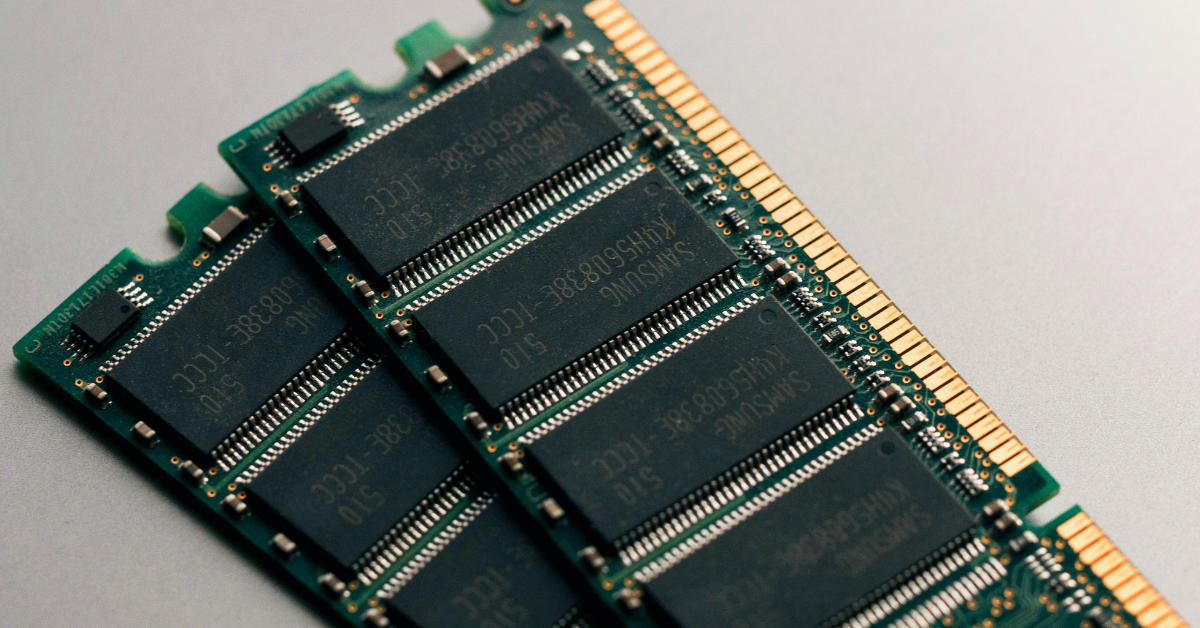
    Finally, the industry is in the middle of another transition. DDR5 is replacing DDR4 across laptops, desktops, and servers. New memory standards always cost more early in their lifecycle, and manufacturers are already beginning to sunset older, cheaper options. We also are seeing some vendors pulling out of the consumer space altogether, with Crucial announcing it will no longer sell RAM to consumers or for consumer devices by February 2026.

    What This Means for Laptops and End-User Devices

    For laptops and desktops, RAM costs don’t just affect performance – they affect purchasing decisions.

    In recent years, it was common to see business laptops ship with 8 GB of RAM at entry-level pricing, with 16 GB as a modest upgrade. In 2026, that pricing gap is expected to widen. Vendors are already signaling higher premiums for memory upgrades, especially on models where RAM is soldered and cannot be expanded later.

    This also means devices may stay in service longer, not because they age better, but because replacing them becomes more expensive. That has ripple effects for security, performance, and user satisfaction.

    Rising RAM costs won’t stop at laptops. They will show up across nearly every category of modern hardware:

    • Higher base prices for laptops, desktops, and workstations
    • Larger premiums for factory memory upgrades on OEM devices
    • Increased server and virtualization host costs, especially for high-density RAM configurations
    • More expensive networking and security appliances that rely on embedded memory
    • Reduced flexibility in cloud and on-prem capacity planning as memory becomes the limiting factor

    This is the one area where “just add more RAM later” is becoming less reliable, particularly as more manufacturers move to non-upgradeable designs.

    So, what should your business do now?The key takeaway isn’t panic, it’s planning. Organizations that wait until hardware fails or users complain will feel these increases the most. Those that plan ahead can blunt the impact significantly. That means reassessing minimum RAM standards, extending device lifecycles intentionally instead of reactively, and avoiding under-spec’d systems that will need replacement sooner than expected.

    It also means budgeting differently. Hardware refresh cycles in 2026 and beyond may cost more even if device counts stay the same. Treating RAM as a strategic resource rather than an afterthought will matter more than it has in years. At Valley Techlogic, we’re already advising clients to think one refresh cycle ahead. The days of “good enough” memory configurations are ending, and the cost of correcting that mistake later is rising. Smart IT planning isn’t about chasing the newest hardware, it’s about buying the right hardware at the right time. As RAM pricing tightens in 2026, that mindset will separate organizations that adapt smoothly from those that scramble.

    If you’re planning a laptop refresh, infrastructure upgrade, or long-term IT budget, now is the time to have that conversation. Book a consultation with us today.

    This article was powered by Valley Techlogic, leading provider of trouble free IT services for businesses in California including Merced, Fresno, Stockton & More. You can find more information at https://www.valleytechlogic.com/ or on Facebook at https://www.facebook.com/valleytechlogic/ . Follow us on X at https://x.com/valleytechlogic and LinkedIn at https://www.linkedin.com/company/valley-techlogic-inc/.

  • How Businesses Can Protect Their Data Privacy While Utilizing AI Tools

    How Businesses Can Protect Their Data Privacy While Utilizing AI Tools

    Artificial intelligence is rapidly transforming how small and mid-sized businesses operate. From producing marketing content to summarizing documents to automating workflows, AI tools can provide undeniable productivity boosts. But with this power comes a real concern: how do you ensure your sensitive business data stays private when using AI systems?

    The good news, businesses can safely leverage AI without putting themselves at risk. It just requires intentional guardrails, the right technology stack, and clear processes. In this post, we’ll walk you through the essentials of protecting your data privacy while using AI – and how Valley Techlogic helps you put these protections in place.

    1. Understand Where Your Data Goes When Using AI

    Many public AI tools process data outside your environment and may store prompts for future model training unless you opt out. That means confidential information—client lists, financials, contracts, internal communications—could be exposed or retained longer than expected.

    Before your team uses any AI platform, you should know:

    • Where the data is sent and stored
    • Whether prompts or outputs are used for training
    • How long data is retained
    • Who (internally and externally) has access to that data

    The first step is recognizingConsumer AI tools are built for convenience, not compliance or with your particular data being safeguarded in mind. Businesses should rely on AI systems that specify they  1. Do not train on your corporate data 2. Offer tenant-isolated storage and encryption. 3. Give you access to administrative controls & audit logs 4. Offer transparency on what happens to the data it collects, and offers strict retention and deletion policies.Microsoft 365 Copilot, for example, keeps data inside your M365 tenant and honors your existing security controls (Entra ID, MFA, DLP, retention labels, Purview, etc.). This reduces the risk of data leakage while enabling powerful AI-driven productivity. If you’re using third-party AI tools, we can help you perform vendor risk assessments and configure them safely.

    AI also magnifies whatever access a user already has, including the rules you have in place in your own organization for accessing data. If a staff member shouldn’t have access to payroll data, they should not be able to surface payroll information through an AI query. Before AI rollout, businesses should:

    • Review least-privilege permissions
    • Ensure MFA and conditional access policies are enforced
    • Segment data appropriately using SharePoint, Teams, and role-based access
    • Audit legacy “wide-open” file shares that AI could unintentionally expose

    AI is not the risk, the access model behind it is.

    You should also create clear AI usage guidelines for your staff. Your employees will need explicit guidance on what they can and cannot put into AI systems.

    Your policy should require:

    • No uploading client PII, financial records, or confidential contracts into AI tools
    • Using only approved, business-managed AI platforms
    • Verification of outputs for accuracy and bias
    • Documentation when AI is used in client-facing deliverables
    • Guidance on storing or sharing AI-generated content

    AI governance is now part of basic digital hygiene, just like password policies. Implementing AI without the right guardrails can expose your business to:

    • Data leakage
    • Compliance violations
    • Intellectual property loss
    • Unauthorized data exposure
    • Shadow IT usage by well-intended employees

    That’s why it’s important to lean on a Managed Server Provider that understands the AI tools that are available and how to manage them, they can assist you in choosing secure AI tools and configuring them so they only access data that’s absolutely necessary to perform the tasks you’re looking for (and ensure that they’re not training on your private company data or exposing it to the outside world). They can incorporate AI strategies into their risk assessment process for your business and make sure the integrations you’re adding aren’t conflicting with any compliance doctrines your business must follow. They will also monitor for abnormalities and misuse in the same way that they protect your business from other day to day technological threats.

    By working with a competent provider you get the productivity benefits of AI, without introducing unnecessary risk. Ready to Adopt AI Safely? Valley Techlogic Can Help. AI is no longer optional for competitive businesses, but neither is data privacy. If you want to empower your staff with AI while keeping your sensitive information protected, Valley Techlogic is ready to guide you step-by-step. Learn more today with a consultation.

    This article was powered by Valley Techlogic, leading provider of trouble free IT services for businesses in California including Merced, Fresno, Stockton & More. You can find more information at https://www.valleytechlogic.com/ or on Facebook at https://www.facebook.com/valleytechlogic/ . Follow us on X at https://x.com/valleytechlogic and LinkedIn at https://www.linkedin.com/company/valley-techlogic-inc/.

  • The No-Headache Way to Create a Written Information Security Plan (WISP)

    The No-Headache Way to Create a Written Information Security Plan (WISP)

    If you’re a CPA firm, financial professional, or any SMB that handles sensitive client data, creating a Written Information Security Plan (WISP) is not optional. It’s a critical part of staying compliant with federal and state regulations and protecting your clients’ trust. But if the idea of drafting one sounds overwhelming, you’re not alone.

    First of all, what is a WISP and why do you need one?

    A WISP is a formal document that outlines how your business safeguards sensitive data, including personal information, tax records, payroll data, or anything that could be used for identity theft or fraud.

    Key Reasons You Need a WISP:

    • Compliance – Regulations like the FTC Safeguards Rule, GLBA, and California’s data privacy laws require a WISP for many businesses.
    • Risk Reduction – It forces you to identify vulnerabilities before a breach happens.
    • Client Confidence – Client’s trust businesses that take data security seriously.
    • Incident Response Readiness – A WISP outlines who does what if something goes wrong.

    Step 1: Identify What Data You’re Protecting (and the People in Charge of Protecting It)

    Start with the following:

    • Identify your Data Security Coordinator (DSC) and Public Information Officer (PIO), they will oversee your WISP implementation.
    • What types of sensitive data do you collect? (Tax records, SSNs, bank info, etc.)
    • Where is it stored? (Local servers, cloud services, employee laptops?)
    • Who has access to it? (Employees, contractors, vendors?)

    Step 2: Assess the Risks

    Once you know what you’re protecting and who is overseeing that protection, identify how that data could be compromised. Common risks include:

    • Phishing attacks or social engineering
    • Ransomware or malware infections
    • Lost or stolen devices
    • Weak or shared passwords
    • Unpatched software

    Step 3: Define Your Security Policies

    This is the “meat” of the WISP. Your plan should spell out:

    • Access controls – Who can access what data and how access is granted/revoked.
    • Password & MFA (Multi-Factor Authentication) requirements – Strong password policies, multi-factor authentication required for all users.
    • Data encryption – For data at rest and in transit.
    • Remote work & BYOD (Bring Your Own Device) policies – How employees can safely access company resources offsite.
    • Backup & recovery – How often backups are performed, where they are stored, and who can restore them.
    • Vendor management – How you vet third-party providers who handle your data.

    Step 4: Train Your Team

    Even the best WISP fails if your employees aren’t on board. Run regular cybersecurity training on:

    • Phishing recognition
    • Safe password habits
    • Proper handling of client data
    • Reporting suspicious activity

    When employees understand the “why” behind security, they become your strongest defense. This will also help you update and implement your Employee Code of Conduct (a necessary WISP component).

    Step 5: Test, Monitor, and Update Regularly

    A WISP is not a “set it and forget it” document.

    • Schedule annual reviews (or more often if you experience major changes like a cyber incident or new regulations).
    • Perform exercises to test your incident response plan.
    • Keep policies up to date with evolving threats.

    How We Can Help

    We know your priority is running your business, not getting buried in compliance paperwork. Here’s how we make WISP implementation painless:

    • Customized WISP Templates – No generic documents, we tailor them to your industry and size.
    • Ongoing Monitoring & Support – Continuous protection, so your WISP stays relevant.
    • Employee Training & Simulated Phishing – Build a security-aware culture and ensure compliance across the board (and document these goals in your Employee Code of Conduct).

    Building a WISP doesn’t have to be stressful or time-consuming, especially with a trusted partner like Valley Techlogic. Learn more today with our step-by-step roadmap on WISP preparedness here and book a free WISP consultation.

    Looking for more to read? We suggest these other articles from our site.

    This article was powered by Valley Techlogic, leading provider of trouble free IT services for businesses in California including Merced, Fresno, Stockton & More. You can find more information at https://www.valleytechlogic.com/ or on Facebook at https://www.facebook.com/valleytechlogic/ . Follow us on X at https://x.com/valleytechlogic and LinkedIn at https://www.linkedin.com/company/valley-techlogic-inc/.